Landscape photography is about more than capturing a view—it is about preserving the feeling of a place. The landscapes of Colorado, especially around Steamboat Springs and the broader Rocky Mountain region, are defined by constant change: shifting light, evolving weather, and the quiet movement of nature across vast terrain.
This collection from CJ Berg Studio focuses on those fleeting moments when everything aligns—when sunrise breaks over distant peaks, when storm clouds roll across alpine valleys, or when golden light stretches across snow-covered ridgelines. Each image is created with attention to composition, atmosphere, and natural storytelling, allowing the viewer to experience the landscape rather than simply observe it.
The region surrounding Steamboat Springs offers a rich variety of subjects, from high alpine environments and dense forests to open valleys and winding rivers. Seasonal transitions are especially dramatic, with deep winter snows giving way to vibrant spring greens, fiery autumn colors, and expansive summer skies. Wildlife often appears as part of the scene, reinforcing the sense of a living, breathing ecosystem.
These fine art prints are designed to bring that sense of place into interior spaces. Whether displayed in a home, office, or gallery wall, each photograph adds calm, depth, and connection to the natural world. The goal is not only to showcase beauty, but to evoke emotion—stillness, awe, and appreciation for the landscapes that shape our environment.
This collection is a visual record of light, land, and time in Colorado’s mountain west, offering a lasting connection to the outdoors through fine art photography.
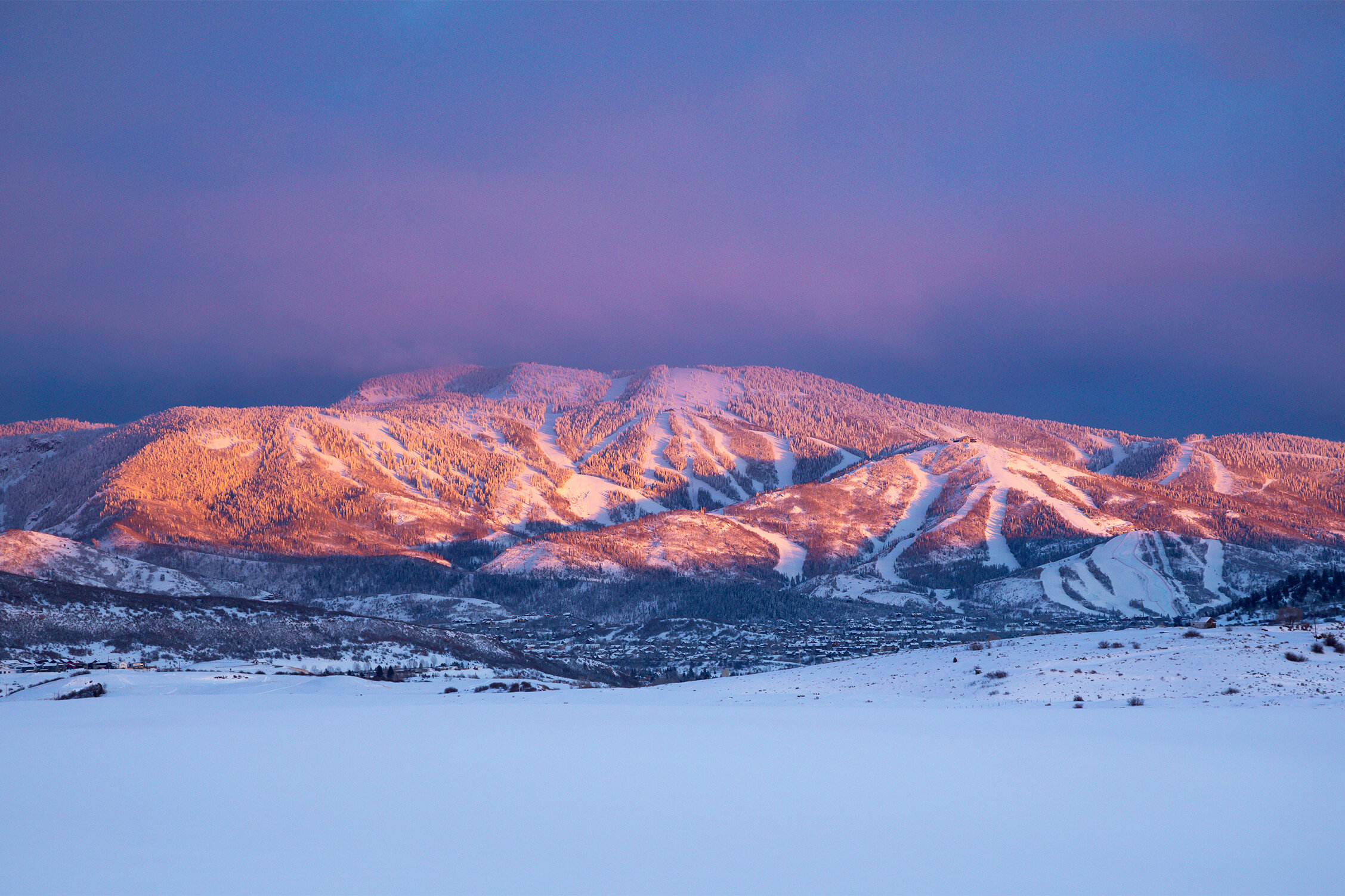
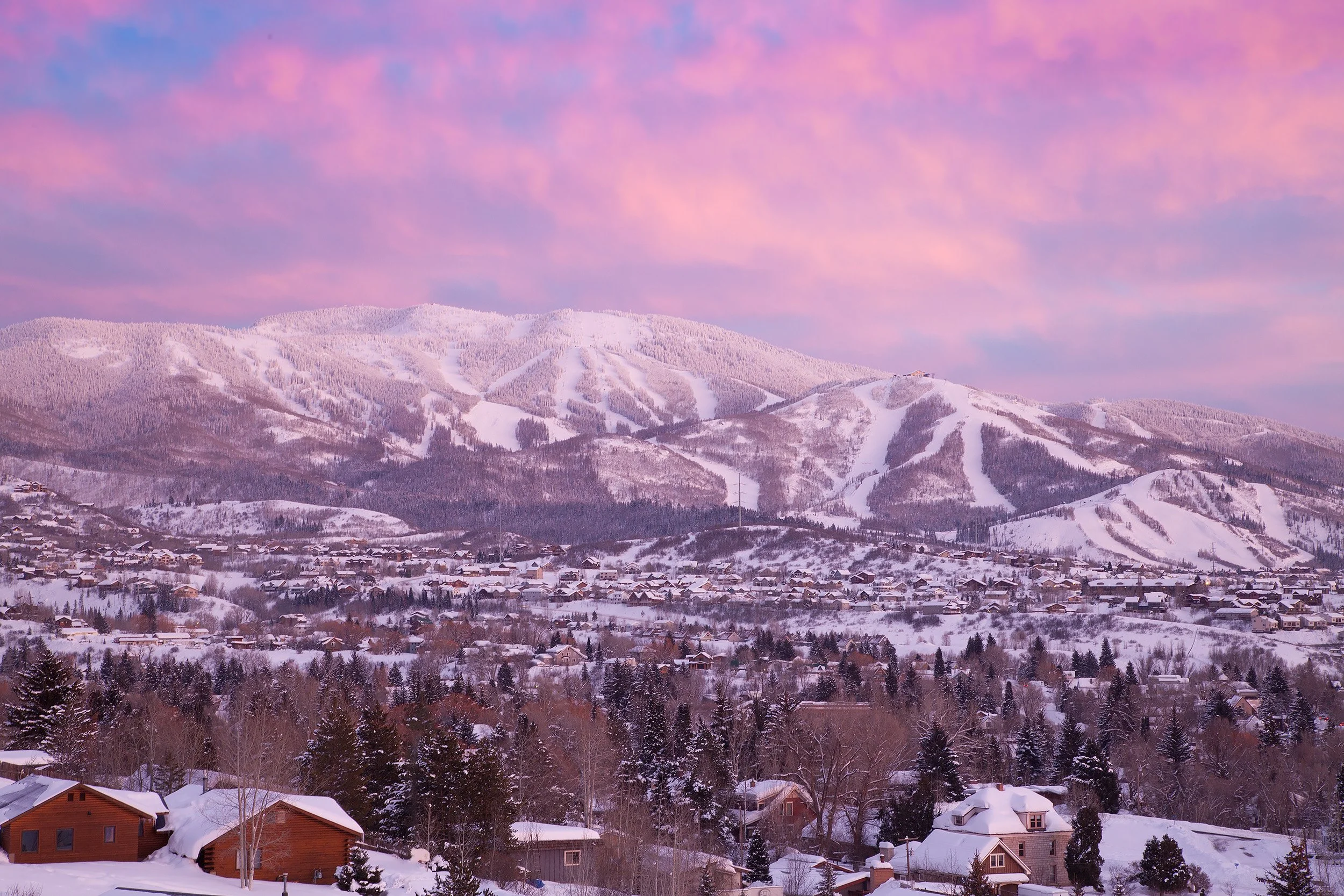
Late afternoon alpenglow on Mt. Werner in Steamboat Springs, CO.
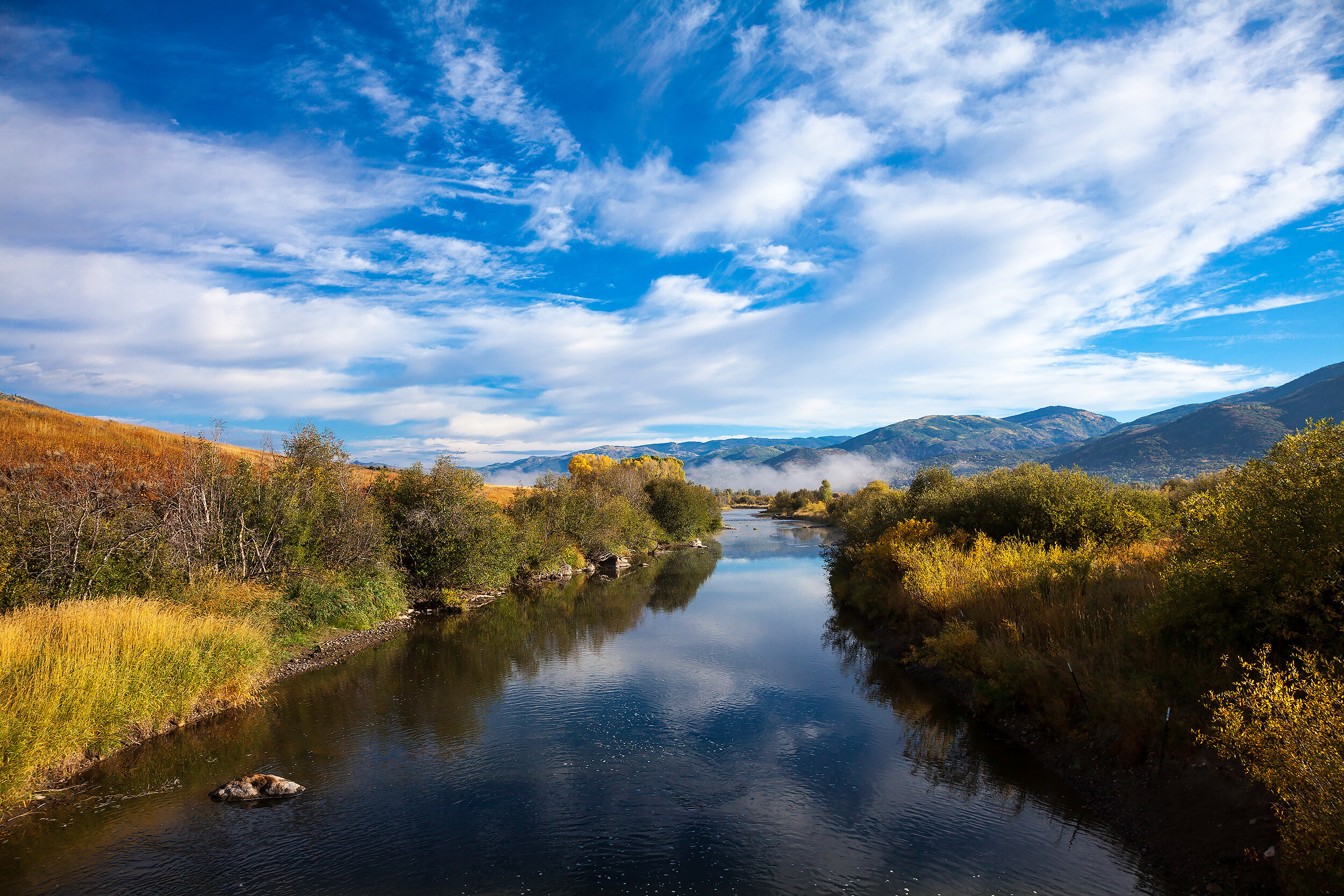
Early morning fall sunrise over the Yampa River in Steamboat Springs, Colorado.
During the Hot Air Balloon Rodeo, the Colorado balloon soars high above the Yampa Valley.
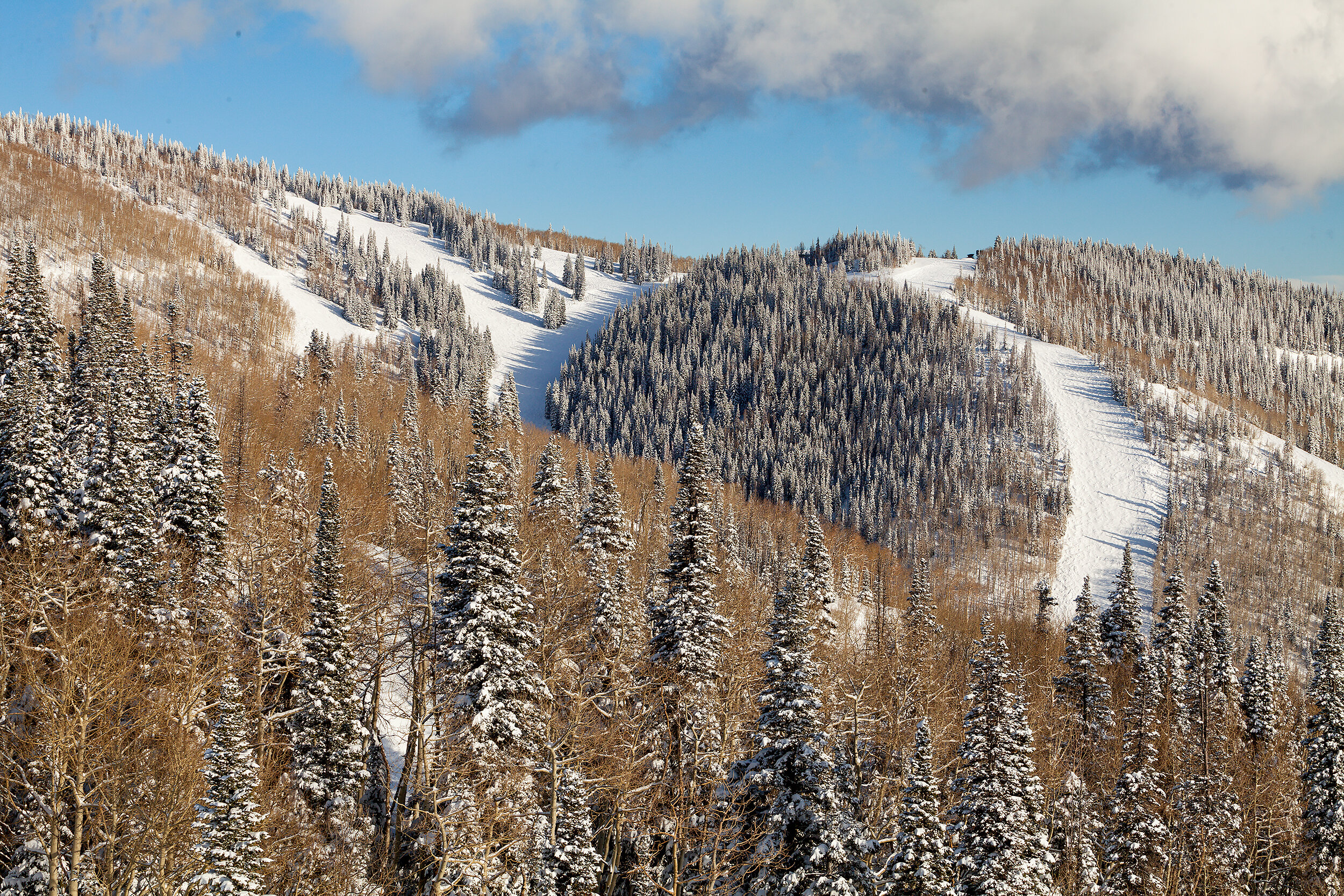
Steamboat Springs, Colorado is a place where the landscape feels both expansive and intimate at the same time. Nestled in the heart of the Yampa Valley and surrounded by the rugged peaks of the Park Range and the broader Rocky Mountains, it offers a constantly changing canvas of light, weather, and seasonal color. This collection of fine art photography from CJ Berg Studio is inspired by that environment—capturing the quiet beauty, dramatic skies, and natural textures that define the region.
From snow-covered winter mornings to golden summer sunsets, Steamboat Springs is a place where nature never looks the same twice. The Yampa River winds through town, reflecting soft dawn light and stormy skies, while surrounding trails and ridgelines reveal sweeping views of valleys, forests, and alpine peaks. Wildlife is often part of the story as well, from elk moving through open meadows to birds cutting across wide mountain skies.
Each image in this collection is created with a focus on composition, atmosphere, and authenticity. Rather than staging or over-processing scenes, the goal is to preserve the feeling of being there—the cold air, the silence of fresh snow, the warmth of late-day sun on sandstone and pine.
These prints are designed to bring a sense of place into homes, offices, and spaces that benefit from calm, natural imagery. Whether you have visited Steamboat Springs or simply appreciate the character of mountain landscapes, this collection offers a way to stay connected to the spirit of Northwest Colorado.
This is more than scenery—it is a visual record of a living landscape shaped by time, weather, and light.
© CJ Berg 2009
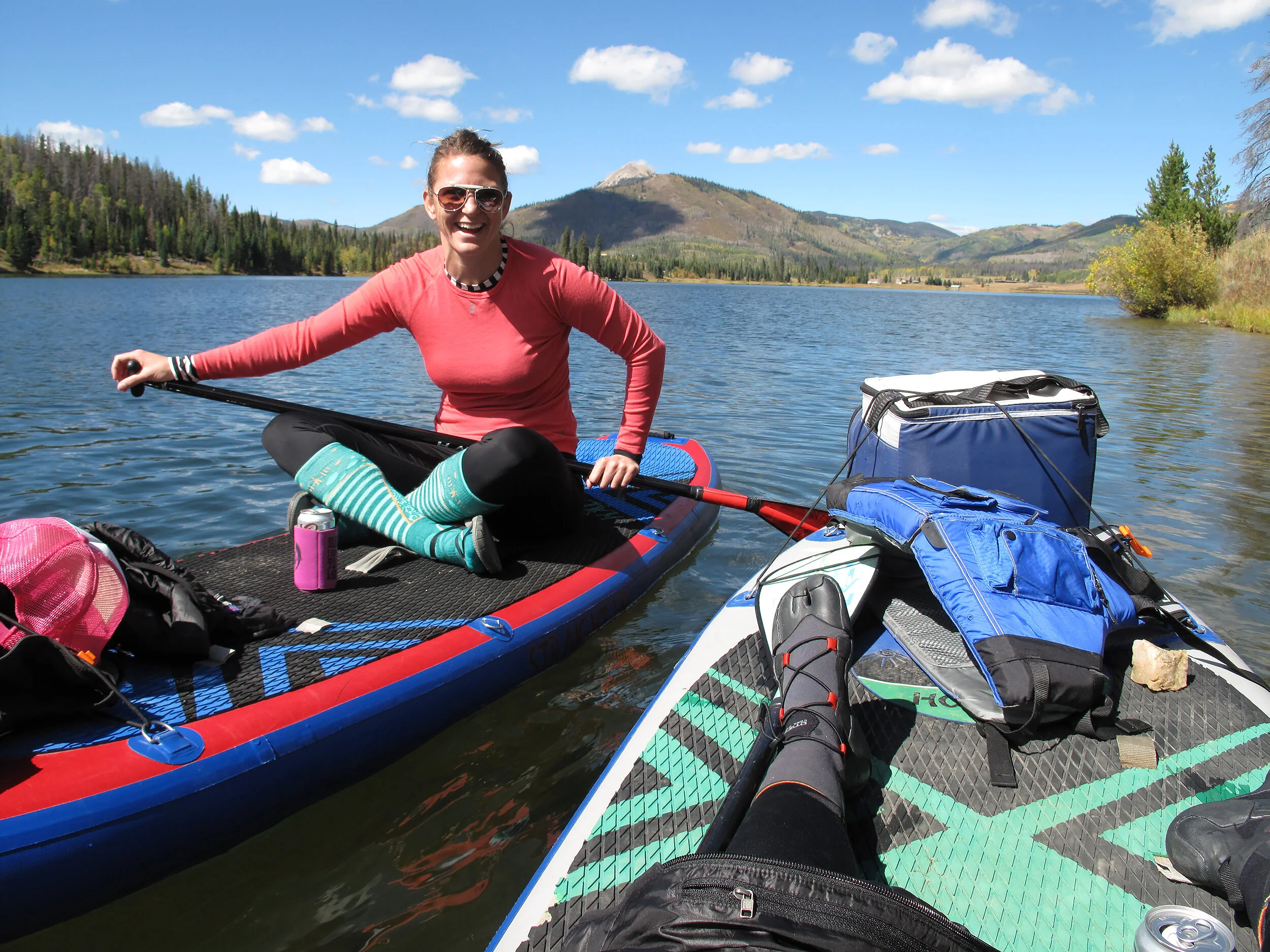
Lifestyle photography is about capturing real life as it unfolds—unposed, natural, and emotionally honest. At CJ Berg Studio, this collection focuses on storytelling through authentic moments, whether it’s people in motion, quiet interactions, or the subtle beauty of everyday environments.
Unlike traditional studio portraiture, lifestyle photography blends documentary-style realism with artistic intention. Each image is guided by light, composition, and timing rather than rigid posing, allowing genuine expressions and natural movement to shape the final frame. The result is photography that feels alive—images that don’t just show what something looked like, but how it felt to be there.
This collection is rooted in the landscapes and communities of Colorado, where natural light, open spaces, and seasonal changes create constantly evolving visual stories. From intimate portraits to broader environmental scenes, lifestyle photography connects people to place, memory, and emotion.
These fine art prints are designed for viewers who value authenticity—those who want imagery that feels personal rather than staged. Whether displayed in a home, office, or creative space, each piece brings warmth, narrative, and a sense of real human connection.
Lifestyle photography is ultimately about storytelling: preserving fleeting moments that might otherwise go unnoticed, and turning them into lasting visual memories.
Wildlife photography is about patience, awareness, and respect for the natural world. In the mountains and valleys of Colorado—especially around Steamboat Springs and the greater Yampa Valley—wildlife exists in a constant rhythm shaped by seasons, weather, and habitat. This collection from CJ Berg Studio is dedicated to capturing those moments when animals reveal themselves in their natural environment, undisturbed and fully present.
From elk moving through open meadows at dawn to birds cutting across vast mountain skies, each image reflects a brief but meaningful encounter with the wild. These moments often last only seconds, yet they reveal the deeper character of the landscape—the balance between survival, movement, and stillness that defines life in the Rockies.
The region surrounding Steamboat Springs provides a rich and diverse ecosystem. Forests, alpine ridgelines, river corridors, and high meadows all support a wide range of species throughout the year. Seasonal changes play a major role in wildlife behavior, from winter migrations and deep snow survival to spring growth and summer abundance. Light, too, becomes part of the story, shaping mood and atmosphere in every frame.
Each photograph in this collection is created with a documentary-inspired approach, focusing on authenticity rather than staging. The goal is to preserve real encounters as they happen—honest, unposed, and grounded in the environment where the subject naturally belongs.
These fine art wildlife prints are designed to bring a sense of connection to the natural world into interior spaces. Whether displayed in a home, office, or gallery wall, they offer a reminder of the beauty, resilience, and quiet presence of wildlife in the American West.
This is not just a record of animals—it is a visual study of life in motion, shaped by land, light, and instinct.
Long exposure photography is a technique that reveals time in a way the human eye cannot see. By using extended shutter speeds, motion becomes visible as flowing light, softened water, drifting clouds, and luminous trails across the landscape. This collection from CJ Berg Studio explores that transformation of time and movement into fine art imagery.
In the mountains and valleys of Colorado, especially around Steamboat Springs and the wider Yampa Valley, long exposure photography becomes a powerful way to interpret the natural environment. Fast-moving weather systems, shifting alpine light, and winding rivers all create ideal conditions for capturing motion in a single frame. Water transforms into smooth, glass-like textures, while wind and clouds stretch across the sky in soft, directional patterns that emphasize depth and atmosphere.
Night scenes offer another dimension to this work. As darkness settles over the Rocky Mountains, artificial and natural light sources begin to interact—stars rotate slowly above the peaks, distant town lights glow warmly against the cold landscape, and subtle illumination reveals structure within the terrain. These moments are not staged, but observed patiently, allowing the landscape to define the composition.
Each image in this collection is created with a balance of technical precision and artistic intention. Exposure, timing, and composition are carefully controlled, but the final result always depends on the unpredictable conditions of the environment. This collaboration between photographer and nature is what gives long exposure imagery its distinctive character.
These fine art prints are designed to bring a sense of motion, calm, and atmosphere into interior spaces. Whether displayed in a home, office, or gallery, they offer a meditative view of time itself—translated through light, landscape, and movement in the natural world.
Here’s a 200–400 word SEO-optimized page description for your /macro page, written to support rankings and match your brand tone:
Macro photography reveals the natural world at its most intimate scale—where texture, pattern, and detail become the primary subject. Instead of sweeping landscapes or distant wildlife, this collection from CJ Berg Studio focuses on the quiet complexity found in close-up moments within nature.
In the mountains and valleys of Colorado, small details are often overlooked but endlessly rich in visual interest. Petals, leaves, frost, water droplets, stone surfaces, and organic textures all become abstract compositions when viewed through a macro perspective. These subjects are not staged or manufactured—they are discovered in natural environments where light and form align in subtle, unexpected ways.
Macro photography requires patience and precision. Working at close range means that even the smallest shift in light or focus can transform the final image. Each photograph is carefully composed to highlight structure, contrast, and natural geometry, allowing viewers to see familiar elements in entirely new ways.
This collection emphasizes the connection between observation and abstraction. What first appears as a simple detail often reveals layered complexity—veins in a leaf resembling rivers, frost patterns echoing mountain ridgelines, or water droplets acting as miniature lenses that reshape their surroundings. These visual parallels create a sense of discovery within the familiar.
The resulting fine art prints are designed for spaces that benefit from calm, reflection, and detail. Whether displayed individually or as part of a gallery wall, macro images invite viewers to slow down and engage with the natural world at a more intentional pace.
This is photography at its smallest scale—but also one of its most revealing forms, where the beauty of nature is found not in distance, but in detail.
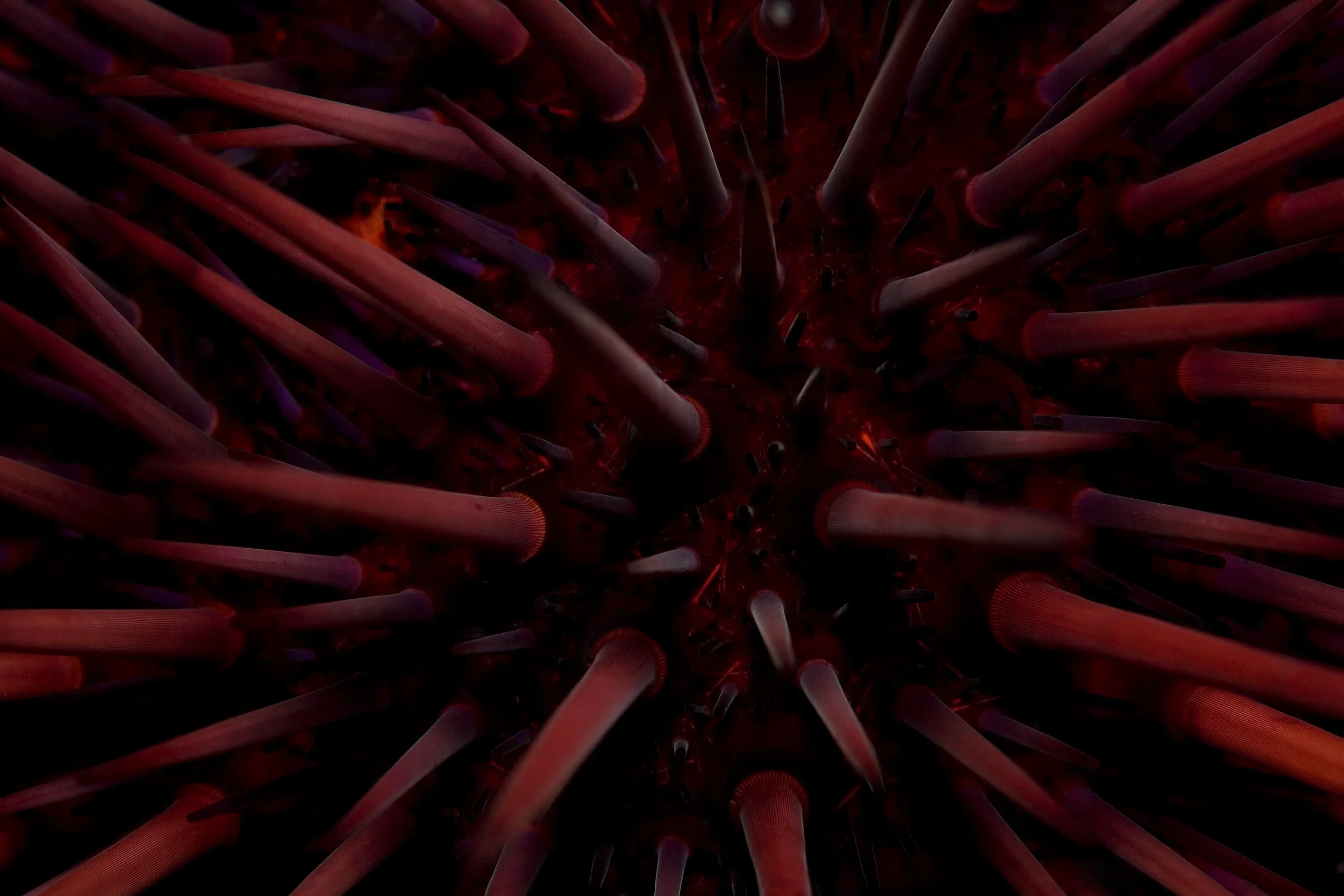
The red sea urchin (Mesocentrotus franciscanus) is a sea urchin found in the northeastern Pacific Ocean from Alaska to Baja California. It lives in shallow waters from the low-tide line to greater than 100 m (330 ft) deep, and is typically found on rocky shores sheltered from extreme wave action.
A sea urchin's spherical body is completely covered by sharp spines. These spines grow on a hard shell called the "test", which encloses the animal. It can vary in color from red to dark burgundy. Rarely, albino specimens are found. It has a mouth located on its underside, which is surrounded by five teeth. During larval development, the body of a sea urchin transitions from bilateral to radial symmetry.
This bilaterally symmetrical larva, called an echinopluteus, subsequently develops a type of pentaradiate symmetry that characterises echinoderms. It crawls very slowly over the sea bottom using its spines as stilts, with the help of its tube feet. Scattered among its spines are rows of tiny tube feet with suckers that help it to move and stick to the sea floor.
Most nudibranchs sport bright colors — sea lemons are deep yellow to burnt orange. Black spots mingle with protruding bumps (tubercles) on the sea lemon's back. Fleshy antennae (sensory organs) and a rosette of gills protrude from the back of a sea lemon's slim, flat body.
A sea lemon, like all nudibranchs, is hermaphroditic and can produce both sperm and eggs. Since nudibranchs live only about one year, the ability to mate with any other nudibranch increases their chances of reproducing.
Circular, light yellow ribbons contain as many as 2,000,000 eggs; less than 1% of the resulting larvae survive. In Monterey Bay, the spawning season is from November to March.
Sea lemons breathe through the rosette of gills on their back. Nudibranchs that have this arrangement of gills are in a family called dorids.
Because the neurons of sea lemons are larger and easier to access than human neurons, researchers find sea lemons useful in their studies of nerve cells. In addition, the abundance of sea lemons makes their collection for research feasible.
A nudibranch's color often matches the color of the sponge it eats.
Sea anemones are a group of marine, predatory animals of the order Actiniaria. They are named after the anemone, a terrestrial flowering plant, because of the colourful appearance of many. Sea anemones are classified in the phylum Cnidaria, class Anthozoa, subclass Hexacorallia. As cnidarians, sea anemones are related to corals, jellyfish, tube-dwelling anemones, and Hydra. Unlike jellyfish, sea anemones do not have a medusa stage in their life cycle.
A typical sea anemone is a single polyp attached to a hard surface by its base, but some species live in soft sediment and a few float near the surface of the water. The polyp has a columnar trunk topped by an oral disc with a ring of tentacles and a central mouth. The tentacles can be retracted inside the body cavity or expanded to catch passing prey. They are armed with cnidocytes (stinging cells). In many species, additional nourishment comes from a symbiotic relationship with single-celled dinoflagellates, zooxanthellae or with green algae, zoochlorellae, that live within the cells. Some species of sea anemone live in association with hermit crabs, small fish or other animals to their mutual benefit.
Sea anemones breed by liberating sperm and eggs through the mouth into the sea. The resulting fertilized eggs develop into planula larvae which, after being planktonic for a while, settle on the seabed and develop directly into juvenile polyps. Sea anemones also breed asexually, by breaking in half or into smaller pieces which regenerate into polyps. Sea anemones are sometimes kept in reef aquariums; the global trade in marine ornamentals for this purpose is expanding and threatens sea anemone populations in some localities, as the trade depends on collection from the wild.